
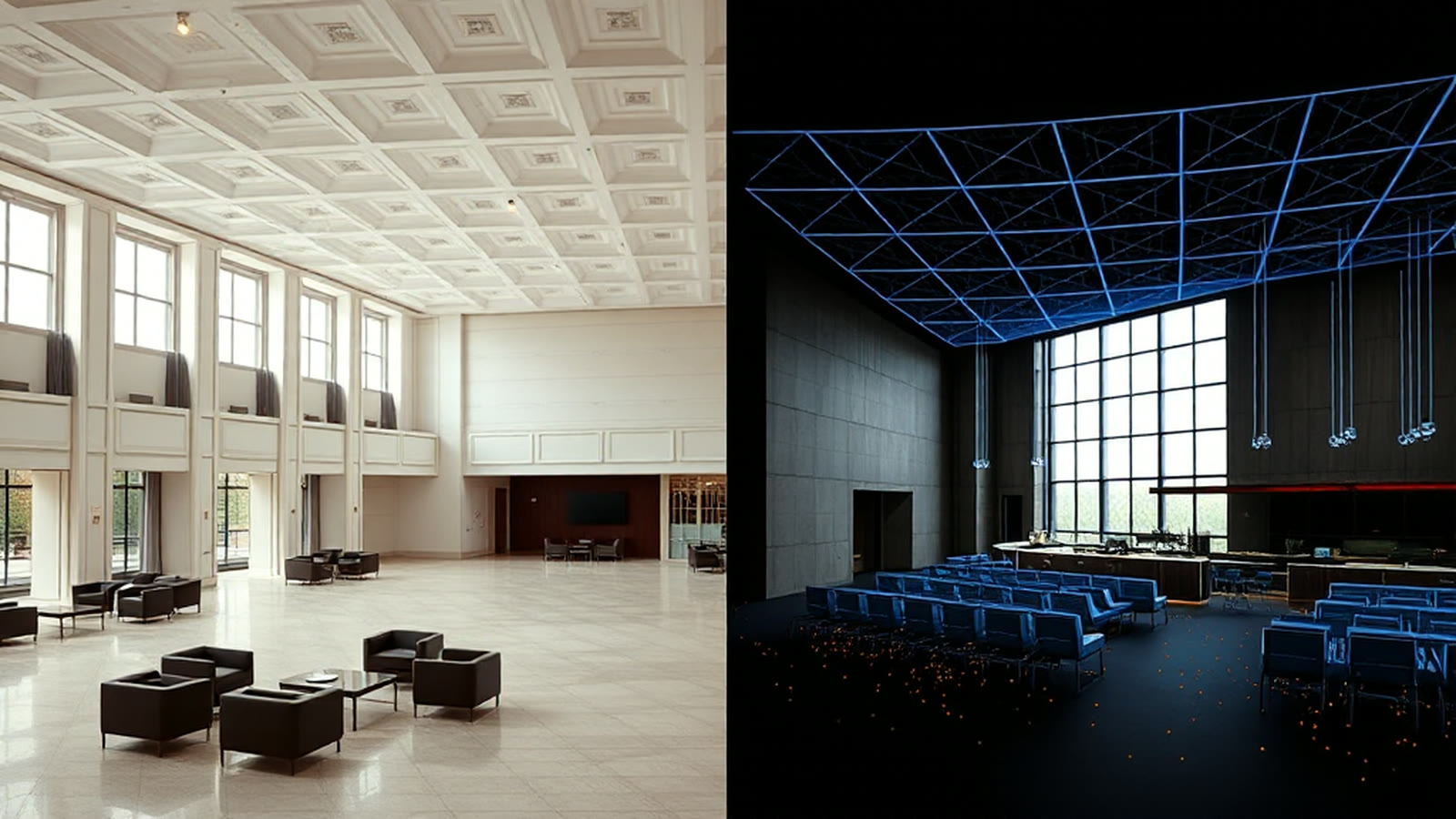
Reality capture technology gets talked about a lot in the context of commercial real estate and AEC documentation, but hospitality is one of the sectors that’s quietly adopted 3D virtual tours the fastest — and for good reason. Booking a hotel room, a meeting space, or an event venue is a purely visual, purely trust-based decision, and nothing sells that trust better than letting a guest actually see the space before they commit.
Here’s what working across hospitality projects has taught us about where 3D virtual tours genuinely move the needle, and where hotel brands and property groups get the most value out of investing in them.
Booking decisions are made on faith — 3D tours reduce the faith required
When someone books a hotel room, they’re trusting a handful of photos and a written description to accurately represent a space they’ve never seen. That’s a lot of faith to ask for, especially for higher-value bookings — extended stays, event spaces, meeting rooms, suites priced well above the standard room rate.
A Matterport 3D tour removes a huge amount of that guesswork. A prospective guest or event planner can walk through the actual room, the actual ballroom, the actual rooftop event space — understanding scale, layout, and flow the same way they would on an in-person site visit. For anyone booking a wedding, corporate event, or conference space sight-unseen, that’s not a marketing nicety, it’s often the deciding factor in whether they book at all.
Where hotels see the clearest return
Not every space in a hotel benefits equally from 3D documentation. Based on what we’ve seen work across property groups, a few areas consistently deliver the strongest return:
Event and meeting spaces. This is the single biggest opportunity. Event planners routinely need to sell a venue to their own clients before ever visiting in person, and a walkable 3D tour of a ballroom or conference space lets them do exactly that — measure the room, understand sightlines, and confidently pitch it internally without a site visit.
Suites and higher-tier rooms. Guests booking a premium room want to see what they’re actually paying the premium for. A 3D tour that lets them explore the suite layout, the separation between living and sleeping areas, the view — all of it — reduces booking hesitation on your highest-margin inventory.
Amenity spaces. Pools, spas, fitness centers, rooftop lounges — these are exactly the spaces that influence a guest’s choice between two similarly priced properties, and they’re exactly the spaces static photography tends to underserve.
Property-wide flow. For larger properties, a full virtual tour that lets a guest understand how the lobby connects to dining, to the pool, to parking, builds a level of comfort that individual photos simply can’t replicate.
The chain-wide consistency problem 3D tours solve
One challenge we consistently see across multi-property hotel brands is inconsistency — one property has professional photography from five years ago, another has phone photos from a manager who did their best, and a third has nothing recent at all. From a guest’s perspective, that inconsistency erodes trust in the brand overall, not just the individual property.
A standardized 3D capture process, rolled out consistently across a portfolio, solves this at scale. Every property gets documented to the same standard, on the same technology, producing tours that look and feel consistent brand to brand — which matters enormously for chains where guests are choosing between multiple properties under the same flag.
What the actual capture process looks like at a property level
For hotel groups new to this, the process is more straightforward than most expect:
- Scoping — deciding which spaces get priority: guest rooms (typically a representative sample across room types, not every single room), event spaces, amenities, and common areas.
- Capture — using a Matterport Pro3 camera, each space gets scanned into a navigable, dimensionally accurate 3D tour, typically completed efficiently even across larger properties.
- Delivery — tours get embedded directly into the property’s booking site, OTA listings where supported, and sales materials for event and meeting space inquiries.
- Rollout — for multi-property brands, this scales into a standardized documentation process applied consistently across the portfolio.
Why this matters more for hospitality than almost any other sector
In commercial real estate or AEC work, a 3D tour supports a decision that’s already backed by a lot of other due diligence — inspections, financials, site visits. In hospitality, the 3D tour often is the primary due diligence a guest or event planner does before booking. There’s no inspection period, no site visit before a deposit goes down on a wedding venue booked from three states away. The tour is doing a huge amount of the trust-building work on its own.
That’s a meaningfully higher-stakes role for the technology to play, and it’s part of why we’ve seen hospitality clients get such a strong return relative to the cost of capture — a single high-value event booking or extended-stay reservation influenced by a 3D tour can cover the cost of documenting an entire property many times over.
What this means for sales and events teams specifically
It’s worth calling out that the biggest beneficiaries of hotel 3D tours often aren’t the marketing team — they’re the sales and events staff fielding inbound inquiries every day. An events coordinator who can send a prospective client a link to walk through the ballroom themselves, at 11pm from another time zone, closes the information gap a phone call or a PDF floor plan never fully closes. It also cuts down significantly on the number of in-person site visits sales teams have to host for clients who were never going to book anyway — the tour does the pre-qualifying work for them, the same way it does for commercial real estate brokers.
For revenue management and marketing teams, there’s a secondary benefit worth mentioning: a well-produced 3D tour is repurposable content. The same capture that powers a booking-site virtual tour can be pulled into social media clips, sales decks for corporate and group bookings, and OTA listings — turning a single capture visit into marketing assets that get used across multiple channels for months or years afterward, not just a one-time booking-page feature.
The takeaway
Hospitality wasn’t the sector we expected to see the clearest ROI story in when we started doing this kind of work, but it’s become one of the strongest. Booking decisions in hotels and event venues are built almost entirely on trust in a space you haven’t seen yet, and nothing closes that gap faster than letting a guest walk through it themselves.
If you’re managing a property — or a portfolio of them — and your current visual documentation is inconsistent, outdated, or just static photos doing a lot of heavy lifting on their own, that’s a straightforward fix, and one that tends to pay for itself fast in the bookings it influences.